The Dilution of Yoga
In a world where yoga often means just postures and fitness classes, I share what true yoga has come to mean on my own journey: a lifelong pilgrimage toward union with the Divine, blending devotion, wisdom, selfless action, and disciplined practice.
Yashoda Manickchund
12/8/20255 min read
There’s a widespread idea, especially in Western culture, that “yoga” simply means flowing through postures, stretching, and building a stronger, more flexible body.
That’s only a tiny fragment of the truth—a small percentage of what yoga truly encompasses. At the risk of oversimplifying something so vast, let me share what I’ve come to understand about yoga on my own journey.
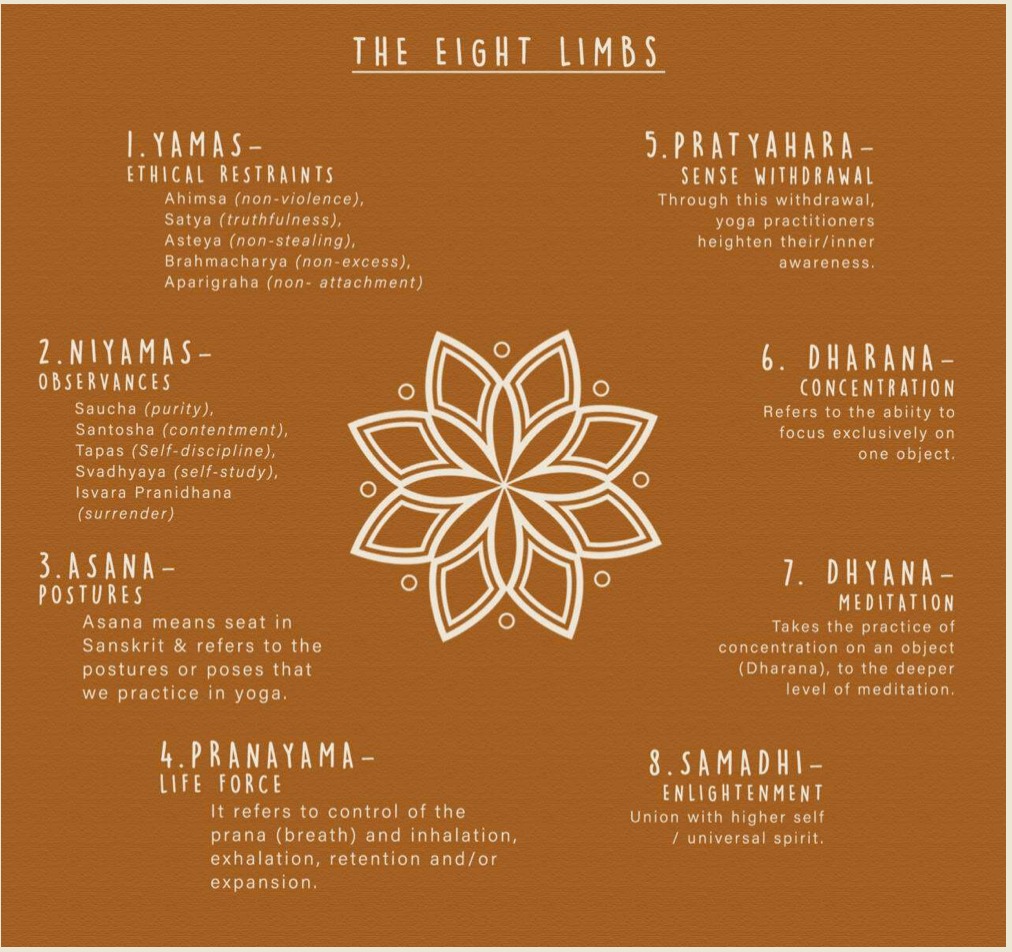
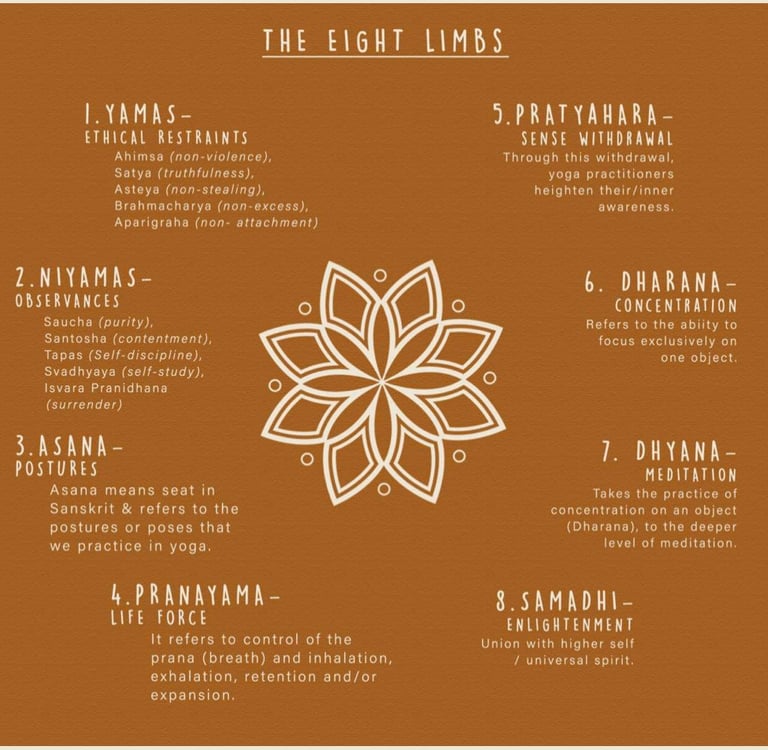
Patanjali’s Yoga Sutras, the most authoritative text we still refer to today (written roughly between the 2nd and 4th century BCE—relatively “recent” in the sweep of Hindu scripture), outlines eight limbs of yoga. Asana (the physical postures) is just one of them—the third, to be exact. These postures were designed to balance and harmonise the physical body with the subtler sheaths (koshas), allow prana (life-force energy) to flow freely, and prepare the practitioner to sit comfortably for long periods of meditation. What later developed into Hatha Yoga grew out of this limb.
When you explore all eight limbs, you quickly realise that yoga is far more than exercise—it’s an entire way of living. The ultimate aim is deep, steady meditation leading to samadhi, the state of bliss-consciousness and complete union.
Authentic yoga has traditionally required initiation from a guru who guides the seeker toward self-realisation through meditative practices. The limbs emphasise ethical conduct in daily life, breath control, withdrawal of the senses, concentration, meditation, and finally that blissful absorption. Patanjali gave us a beautifully structured framework, yet there remains immense experiential and esoteric wisdom that no book can fully convey. The sheer variety of practices and branches hints that yoga isn’t meant to be completely grasped by the mind; it’s a path—one among many—that your own intuition and guidance will draw you toward.
What helped me immensely was understanding the different paths of yoga as various ways of seeking union with the Divine (which appears separate from us, though the whole purpose is to realise that separation is illusion).
I stumbled upon a beautiful explanation by Alan Watts that captures this with a poetic grace I could never match—I’ll link the video below because it’s truly worth your time.
Here’s a gentle overview of the main paths:
Bhakti Yoga
This is the path of devotion. Quite simply, it’s offering your love to the Divine in whatever form calls to your heart—Jesus, Allah, Krishna, the Divine Mother, or a formless presence. Whether alone in silent prayer or singing with others in temples and churches, bhakti is that melting feeling when a hymn or mantra fills you with longing and love. You’re practising yoga when the heart opens and recognises its true nature as Love itself.
Jnana Yoga
The path of knowledge and wisdom. This might look like poring over sacred texts with fierce discernment, listening intently to realised teachers, or relentlessly asking “Who am I?” Ramana Maharshi, a supreme jnani, paradoxically set scriptures aside and pointed directly to self-inquiry—meditating only on that one question. His teaching echoes the profound biblical revelation of God’s name: “I AM THAT I AM,” and invites us to rest in pure “I am” presence. Jnana Yoga uses the intellect to transcend the intellect, revealing the witness behind all thoughts and experiences. You’ll find countless expressions of this path—Eckhart Tolle’s Power of Now is a modern doorway for many.
Karma Yoga
The yoga of action and selfless service. Any act offered without expectation of reward—caring for a patient, tending the earth, raising children, doing your work with full presence and no attachment to outcomes—is karma yoga. Whether you’re a doctor, farmer, parent, or friend, accepting your role as a divine gift and performing it with love turns ordinary life into sacred offering. Success and failure simply become experience when you remain clear and unattached.
Raja Yoga
Often called the royal path, this is the most disciplined and intensive approach, using specific techniques to master body and mind and attain bliss-consciousness. It traditionally requires guidance from a realised guru who has walked the path and can transmit the practices safely. Many lineages exist, handed down through centuries. One such lineage is Kriya Yoga, brought to the West by Paramahamsa Yogananda. Through his Self-Realisation Fellowship, his teachings and lessons remain available to sincere seekers. I’ve been deeply blessed to study these lessons myself, and they continue to illuminate my path. Patanjali’s Yoga Sutras beautifully condense the essence of Raja Yoga.
On my own evolving path, I now follow a Guru in the Siddha Yoga lineage—a profound tradition rooted in the ancient wisdom of the Siddhas, enlightened masters from South India. Unlike more widely known paths that draw primarily from the Upanishads and Vedanta, Siddha Yoga weaves together elements of bhakti, jnana, karma, and raja practices as revealed in rare Siddha texts and poems. These teachings emphasise the awakening of inner energy (shakti), direct experience of the Divine within, and the guru’s grace as the living bridge to self-realisation. It beautifully integrates mantra, meditation, selfless service, and heartfelt devotion, reminding us that all authentic paths ultimately converge in the same Truth. I feel immense gratitude for this guidance, which continues to deepen my yatra with gentle power and clarity.
So what are most yoga studios offering? Primarily Hatha Yoga—an invaluable branch that prepares the body and energy field for deeper work. The calm, reduced anxiety, and vitality you feel after class come from balancing prana and releasing stored tension. It’s wonderful preparation, yet the ultimate destination is divine union—bliss-consciousness—through whichever combination of paths resonates with your soul.
Yoga is your unique, personal journey home. It weaves together right action (karma), devotion (bhakti), wisdom (jnana), and disciplined practice (raja) until all the layers of your being align, and the walls between you and the Divine dissolve—first as glimpses through a window, then as open doors, and eventually as no separation at all.
When I say in my blogs that I practise yoga, this is what I mean. And perhaps now you’ll recognise that you, too, are already walking a form of yoga—maybe through heartfelt prayer, selfless service, or moments of profound inquiry.
I’m not a hatha yoga teacher, nor an enlightened sage. My practice draws from the eight limbs Patanjali outlined and from the living grace of realised masters and life itself. I can only share what resonates, in the hope it supports you on your own yatra—the lifelong pilgrimage back to the Self.
With deep reverence and endless gratitude to my gurus and guides,
Yashoda 🙏🏽
P.S. Here’s the Alan Watts clip I mentioned—it’s pure gold:
Yashoda Yatra
Holistic healing through ancient and modern practices.
INQuiRY
info@yashodayatra.com
© 2025. All rights reserved.
Consultation
Connect