
Navigating Shadows and Light
Insights on Self-Worth, Narcissism, and Spiritual Growth
Yashoda Manickchund
9/27/20255 min read


Hi, I’m Yashoda, a pediatric surgeon now guiding others through holistic healing at Yashoda Yatra. In my work and personal life, I’ve come to appreciate how our life journeys—from early beginnings to where we stand today—often involve encountering shadows, those hidden aspects of ourselves and others that shape our experiences. Rather than turning away or absorbing them unconsciously, I’ve learned the power of shining awareness directly on them. It’s in that illumination that shadows dissolve, revealing clearer paths forward. Today, I want to share some reflections on this process, drawing from my own insights and observations, to help you navigate similar terrain with compassion and strength.
The Power of Awareness: Shining Light on Shadows
At the heart of personal growth is the simple act of bringing light to darkness. Shadows aren’t enemies; they’re invitations for deeper understanding. When we avoid them, they linger and influence our behaviors in subtle ways. But by directing our awareness—like a gentle spotlight—we can integrate them, fostering true clarity and resilience. This isn’t about judgment; it’s about empowerment. The light of awareness is always stronger, transforming what once felt overwhelming into manageable insights.
Rethinking Narcissism: Roots in Fear and Self-Worth
Narcissism is often misunderstood as mere arrogance or an oversized ego, but its foundations run deeper, often stemming from unmet needs for emotional safety in childhood. When core fears—around pain, rejection, or vulnerability—aren’t addressed, protective mechanisms emerge. These can manifest in different forms, each a strategy to shield a fragile sense of self-worth.
For instance, grandiosity might arise from a fear of losing control, leading someone to elevate themselves while dominating their environment. On the other hand, vulnerable narcissism could express as deep-seated feelings of inadequacy, prompting behaviors like denial or manipulation to maintain a facade. Both are coping strategies, not inherent flaws, and recognizing this fosters empathy without excusing harm.
In spiritual circles, there’s another layer: the “spiritual narcissist,” who may cloak insecurities in claims of enlightenment or superiority. Here, discernment becomes key. True spiritual guidance points you toward your own inner wisdom, not toward idolizing another. Actions and energy always reveal more than words—look for reciprocity, humility, and a genuine intent to empower others. In my practice, I emphasize building a direct connection with your higher self, where true discernment flows naturally.
Distinguishing Ego from Self-Worth
A common confusion arises between ego and self-worth. The ego can masquerade as confidence, but it’s often a shadowy construct built on illusions and past wounds. Self-worth, however, is that unshakeable knowing of your inherent value—a light that persists beyond life’s challenges. Peeling back the ego’s layers, through practices like sincere reflection or prayer, reveals this core. It’s not about erasing the ego entirely but seeing through its mist to the soul’s purity. In holistic healing, tools like meditation or energy work can help dissolve these illusions, allowing your authentic light to shine.
Embracing the Role of the Awakened Empath
As someone attuned to energies and emotions, I’ve come to value the gift of seeing both shadows and light in others. It’s not about ignoring the fog of illusion but acknowledging it while focusing on the potential beneath. Loving from this place means setting boundaries that honor everyone’s worth—including your own. It means refusing to condone harm while holding space for growth.
In my journey, integrating these insights has strengthened my ability to guide others. No longer do I dim my perceptions or allow them to be overshadowed; instead, I trust them as tools for protection and compassion. If you’re an empath or simply someone seeking balance, remember: You have the discernment to see things as they are. Use it to enhance connections with those who uplift you and to establish clear boundaries with those who don’t.
Moving Forward with Compassion
Our shadows don’t define us—they’re part of the human experience. By shining light on them, we reclaim our power and foster genuine self-worth. If this resonates, consider exploring your own journey through practices that build awareness, like yoga, meditation, or even a Bio-Well scan at Yashoda Yatra to gain insights into your energy patterns. Let’s connect and untangle these layers together—your light is waiting to emerge.
Further Reading on Shadow Work and Carl Jung’s Theories
If you’d like to explore the psychological roots of navigating shadows and integrating the unconscious self, these resources draw from Carl Jung’s pioneering ideas on the shadow archetype—a hidden part of the psyche that holds repressed traits and emotions. Shadow work, inspired by Jung, involves bringing these elements into awareness for healing and growth. Start with beginner-friendly guides and progress to deeper texts.
Johnson, R. A. (1993). Owning Your Own Shadow: Understanding the Dark Side of the Psyche. HarperOne. A concise introduction to Jung’s shadow concept, with practical steps for integration.
Jung, C. G. (1969). The Archetypes and the Collective Unconscious (Collected Works of C.G. Jung, Vol. 9, Part 1). Princeton University Press. Explores archetypes, including the shadow, as universal patterns in the human psyche.
Jung, C. G. (1965). Memories, Dreams, Reflections. Vintage Books. Jung’s autobiography, offering personal insights into his theories on the shadow and unconscious.
Luna, A. (2023). Mindful Shadow Work: Exercises to Discover Your Hidden Self and Heal Old Wounds. LonerWolf Press. A modern workbook with guided prompts and exercises for practical shadow work.
Ford-Martin, P. (2023). Practical Shadow Work Workbook: 50+ Guided Exercises for Deep Healing and Self-Discovery. Independently published. Includes journal prompts and activities to identify and transform shadow patterns.
Jeffrey, S. (2025). Shadow Work Guide: 5 Practical Beginner Exercises (Jungian). Available at: https://scottjeffrey.com/shadow-work/. An online resource with step-by-step Jung-inspired exercises for starting shadow work. 10
The Spiritual Significance and Symbolism in Hindu Mythology: A synchronistic Ode to Devi during Navaratri
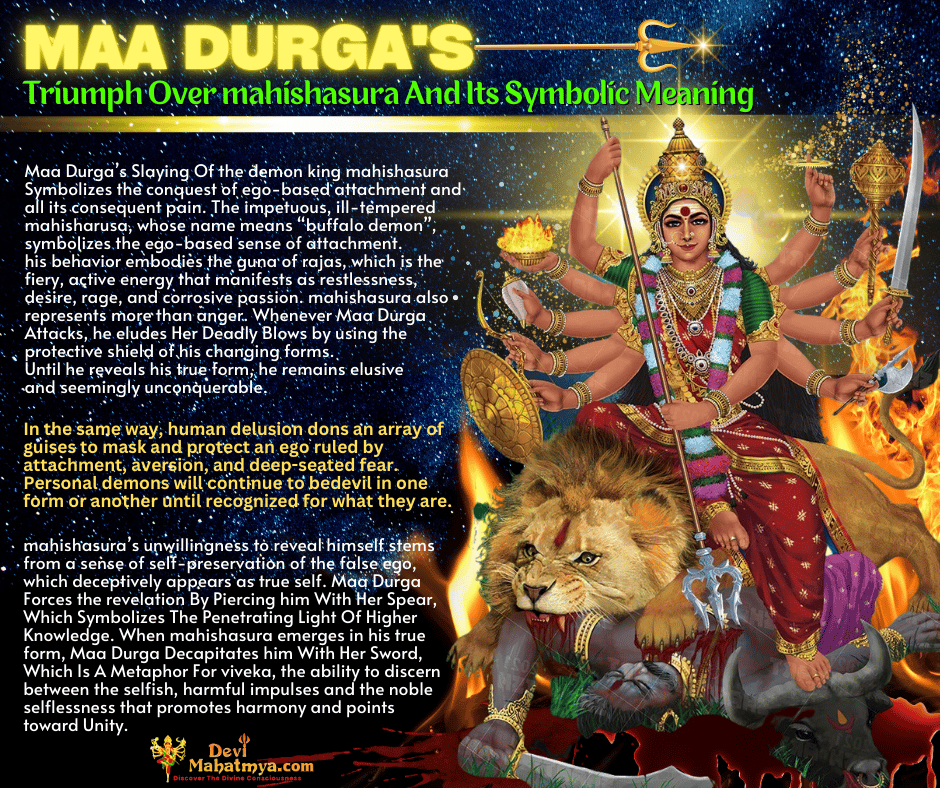
During this potent time for Hindus called Navaratri, we celebrate the different aspects of Devi (the Divine Feminine). During this journey as I have described in my Blog, I have been drawn to a particular stotram, The Mahishasura Mardhini, which describes the victory of Maa Durga over a demon called Mahishasur. Thanks to the teachings of my Guru, I have a renewed appreciation and respect for our Vedic and Puranic texts and the deep symbolism behind them, helping us through our soul's evolution through devotion and surrender to the Divine.
I have included a powerful description of this battle and the symbolism from devimahatmya.com. Reading this, you will find the symbolism of this part of my journey and why I have been drawn to it during this time. Listening and reciting the Stotram and learning the meaning behind it, gives me strength and courage to face this age old battle, in surrender to Devi. I hope it will bring some clarity and guidance to you also.
Jai Maa Durga.
"Maa Durga’s Slaying Of the demon king Mahishasura symbolises the conquest of ego-based attachment and all its consequent pain. The impetuous, ill-tempered Mahisharusa, whose name means “buffalo demon”, symbolises the ego-based sense of attachment.
His behaviour embodies the guna of rajas, which is the fiery, active energy that manifests as restlessness, desire, rage, and corrosive passion. Mahishasura also represents more than anger. Whenever Maa Durga Attacks, he eludes Her Deadly Blows by using the protective shield of his changing forms. Until he reveals his true form, he remains elusive and seemingly unconquerable.
In the same way, human delusion dons an array of guises to mask and protect an ego ruled by attachment, aversion, and deep-seated fear. Personal demons will continue to bedevil in one form or another until recognized for what they are.
Mahishasura’s unwillingness to reveal himself stems from a sense of self-preservation of the false ego, which deceptively appears as true self. Maa Durga Forces the revelation By Piercing him With Her Spear, Which Symbolizes The Penetrating Light Of Higher Knowledge. When mahishasura emerges in his true form, Maa Durga Decapitates him With Her Sword, Which Is A Metaphor For 'Viveka', the ability to discern between the selfish, harmful impulses and the noble selflessness that promotes harmony and points toward Unity."
For a more detailed description of the symbolism of this great battle, follow this link:
Yashoda Yatra
Holistic healing through ancient and modern practices.
INQuiRY
info@yashodayatra.com
© 2025. All rights reserved.
Consultation
Connect